You can feel the difference between a brownstone block and almost any other kind of Manhattan street. On the Upper West Side, that difference is not just about looks. It shapes how you enter your home, how you move through it, and how your day connects to parks, errands, and transit. If you are curious about what brownstone living here actually feels like, this guide will walk you through the space, style, and daily routine that define it. Let’s dive in.
Why Upper West Side Brownstones Feel Different
The Upper West Side is a compact stretch of Manhattan defined by Community Board 7 as West 59th to West 110th Streets, between Central Park and the Hudson River. That setting matters because brownstone living here is woven into a dense, walkable neighborhood framed by two major park edges.
Many blocks are also shaped by historic district protections. Landmarks Preservation Commission materials identify brownstone-fronted row houses on streets like West 71st Street, and include brownstone clusters in the Riverside-West End Historic District Extension II on West End Avenue and West 102nd Street. The broader Upper West Side and Riverside-West End historic districts help explain why so many streets still feel visually consistent from one building to the next.
That preserved look comes with a practical side. Landmark designation does not mean a building can never change, but the Landmarks Preservation Commission says exterior alterations, reconstruction, demolition, or new construction affecting a designated property require approval. If you love stoops, cornices, and historic facades, that review process is part of what helps protect the streetscape.
What Brownstone Layouts Usually Offer
Most classic Manhattan rowhouses are narrow, attached, and vertical. Planning and LPC-related materials describe these houses as commonly about 16 to 18 feet wide and often three to four stories tall, with a lower level or walk-out basement. In daily life, that means your space is usually organized by floor rather than by one large, open level.
This is one of the biggest mindset shifts if you are used to a condo layout. Brownstone living often gives you separation between entertaining, sleeping, and flexible lower-level use. Instead of broad open-plan volume, you get stacked rooms with more defined purposes.
The Parlor Floor Explained
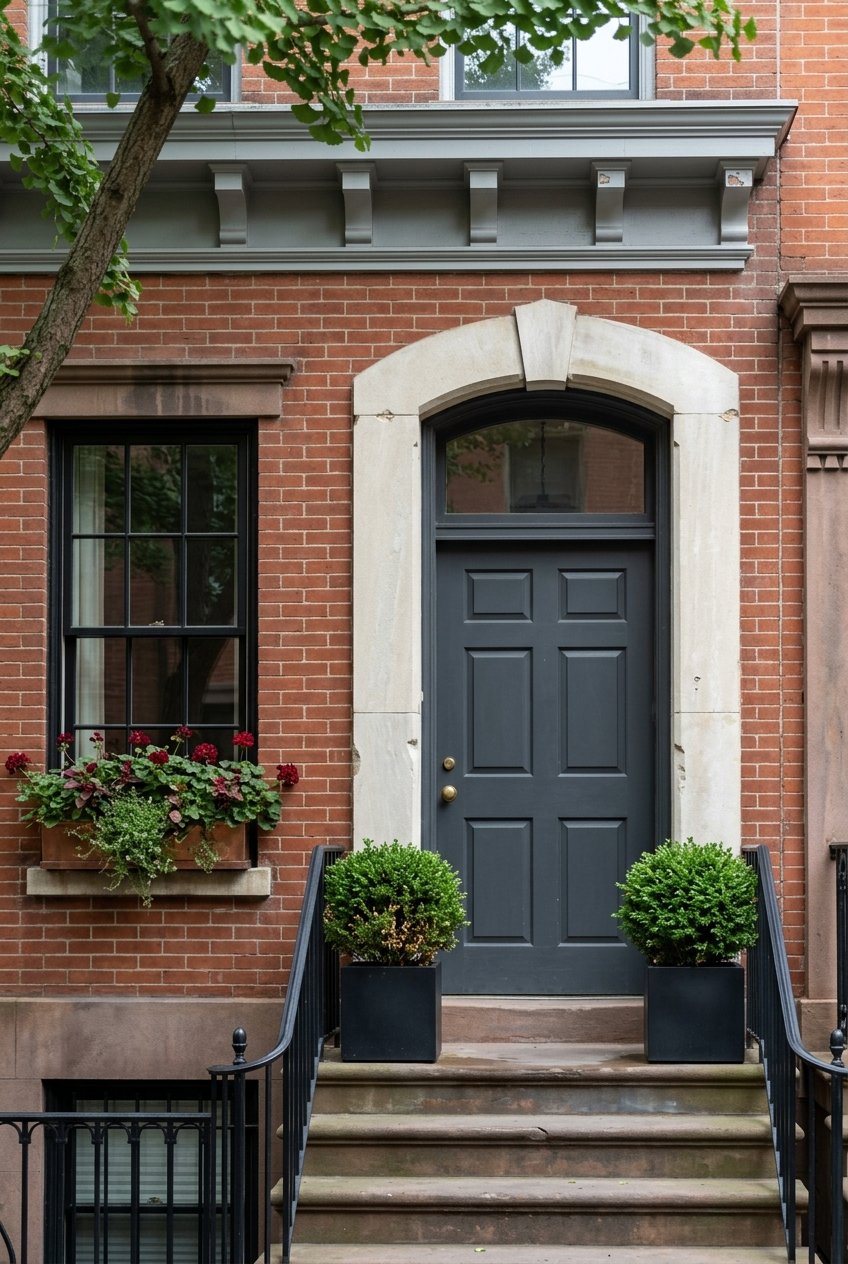
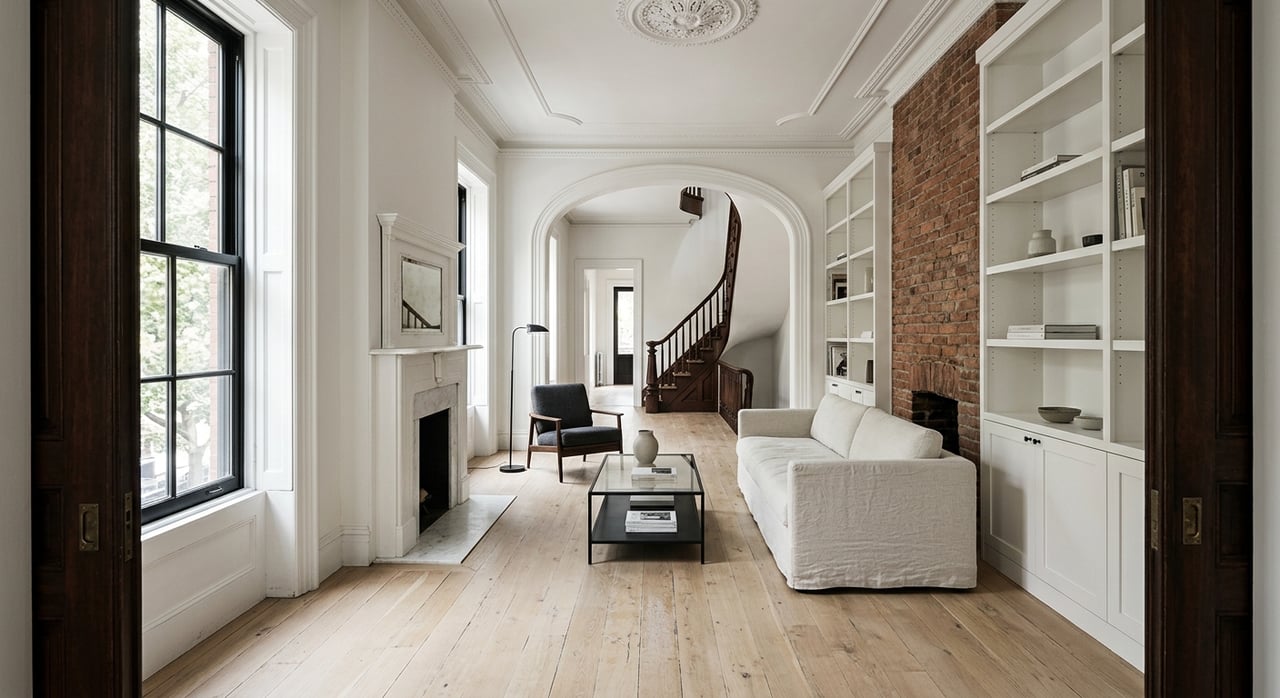
In a traditional stoop house, the main entrance sits above street level, and the parlor floor becomes the primary living level. LPC reports describe the classic elements clearly: a raised stoop, iron railings, aligned windows, and formal rooms on that elevated main floor.
For many buyers, the parlor floor is the emotional center of the house. It is often where living and entertaining happen, and it tends to feel more removed from the sidewalk than a street-level living room. That separation can make the space feel both grand and practical.
Basement and Garden Levels
In many brownstones, the lower level is the most flexible part of the home. Historic rowhouse plans often placed dining or service functions there, and many homes today use these floors in a range of ways depending on the building’s condition and configuration.
If you are evaluating a specific property, one of the smartest questions to ask is how finished and functional the lower level really is. The answer can affect everyday use just as much as the parlor floor does.
American Basement vs. Stoop Entry
Not every brownstone follows the same plan. LPC reporting on rowhouse design also describes the American basement layout, where the entrance is closer to street level and the parlor occupies the front of the house, with the dining room behind it.
That distinction matters because it changes how the house feels when you come home. A classic stoop entry can feel ceremonial and elevated, while an American basement plan often feels more direct and level. Neither is automatically better. It depends on how you want your daily routine to work.
How Space Shapes Your Routine
Brownstone living on the Upper West Side is often about rhythm as much as square footage. Because the home is vertical, your day naturally breaks into zones. Public rooms tend to stay on the entertaining level, bedrooms move upstairs, and lower floors often absorb overflow uses.
That setup can create welcome privacy by floor. At the same time, it usually means more stair use and a more compartmentalized layout than you would find in a newer condo. Those tradeoffs are part of the brownstone experience, and they are worth thinking about early.
Storage can also feel more precious in this kind of home. That is not a rule for every property, but it is a common consideration in narrow rowhouse layouts. If storage is high on your priority list, it helps to look beyond surface charm and pay close attention to closets, built-ins, and lower-level utility space.
Daily Life Between Two Parks
One of the strongest lifestyle advantages of the Upper West Side is how naturally park access fits into daily life. Central Park runs from 59th to 110th Streets between Fifth Avenue and Central Park West and spans 840.01 acres. Riverside Park adds about six miles of parkland along Manhattan’s West Side from West 59th Street to 181st Street.
For brownstone residents, that geography creates real day-to-day convenience. A morning walk, dog outing, stroller loop, or evening run can often happen without much planning. You are not traveling to green space. In many parts of the neighborhood, you are simply choosing which direction to walk.
That is a major part of the Upper West Side routine. Brownstone blocks can feel calm and residential, yet the neighborhood still connects quickly to large public outdoor space on both sides.
Errands Stay Close to Home
The neighborhood’s retail pattern is another reason brownstone living here feels efficient. According to NYC Planning, the Upper West Side’s traditional retail streets are Broadway, Amsterdam Avenue, and Columbus Avenue, and these corridors carry groceries, dry cleaners, drug stores, restaurants, and other daily needs.
That setup gives the area a useful balance. Side streets can stay largely residential, while the avenues handle the practical parts of city life. For you, that often means a short walk for coffee, groceries, or last-minute errands without giving up the quieter feel of a rowhouse block.
This is one reason the neighborhood routine feels so established. You can step out of a historic home and still move through a highly functional daily pattern in just a few blocks.
Transit Supports a Car-Light Routine
The Upper West Side is not built around one single subway stop. MTA maps show broad coverage from the 1, 2, 3, B, and C lines, with stations including 59 St-Columbus Circle, 66 St-Lincoln Center, 72 St, 79 St, 81 St-Museum of Natural History, 86 St, 96 St, 103 St, and Cathedral Pkwy (110 St).
In practice, that supports a neighborhood where many trips start with a short walk to a station rather than a long haul across town. If you live in a brownstone here, transit is usually distributed enough that you can shape your routine around more than one line.
Cycling can also fit into that mix. NYC DOT notes that the Manhattan Waterfront Greenway provides shoreline access for recreation and commuting, which reinforces the possibility of a car-light lifestyle on the West Side.
Style Means Character With Responsibility
Brownstones are often loved for their architectural detail and sense of place. Stoops, ironwork, masonry facades, aligned windows, and historic proportions give these homes a presence that newer buildings rarely replicate. On the Upper West Side, that character is part of the block-level identity as much as the individual house.
Still, charm and maintenance go together. If a property is landmarked, exterior work may require review and approval by the Landmarks Preservation Commission. That does not have to be a negative, but it is part of ownership and renovation planning.
For buyers and owners alike, the key is to see the full picture. Brownstone living can offer privacy, beauty, and a strong connection to neighborhood history, but it also asks you to think carefully about layout, stairs, storage, and exterior rules.
What To Consider Before You Buy
If you are comparing an Upper West Side brownstone with a condo or co-op, a few practical questions can help sharpen your search:
- How is the entrance configured: stoop house or American basement?
- What rooms sit on the parlor floor, and does that match how you live?
- Is the lower level finished, legal, and useful for daily life?
- How many flights of stairs will you use most days?
- Where are your nearest park access points, retail corridors, and subway lines?
- Is the property in a historic district, and what could that mean for exterior work?
These are not small details. In Manhattan townhouses, they shape your routine as much as the address itself.
If you want help evaluating how a specific Upper West Side brownstone fits your lifestyle, goals, and long-term plans, Phyllis M Mehalakes brings neighborhood knowledge and townhouse-focused guidance to every step of the process.
FAQs
What is Upper West Side brownstone living like day to day?
- It often means living in a vertical home with distinct floors, easy access to Central Park or Riverside Park, short walks to errands on Broadway, Amsterdam, or Columbus, and convenient subway options across the neighborhood.
What is the parlor floor in an Upper West Side brownstone?
- In a traditional stoop house, the parlor floor is the main living level above the basement, and it often serves as the primary space for sitting rooms and entertaining.
What is the difference between a stoop house and an American basement brownstone?
- A stoop house places the main entrance above street level, while an American basement plan puts the entrance closer to street level and typically places the parlor at the front with dining space behind it.
Are Upper West Side brownstones usually wide open inside?
- Not typically, since classic Manhattan rowhouses are generally narrow and organized by floor, which often creates more separate rooms and less open-plan space than newer condos.
What does landmark status mean for an Upper West Side brownstone?
- If a property is designated, exterior alterations, reconstruction, demolition, or new construction affecting the building generally require approval from the New York City Landmarks Preservation Commission.
Where do most errands happen near Upper West Side brownstones?
- NYC Planning identifies Broadway, Amsterdam Avenue, and Columbus Avenue as the neighborhood’s main retail corridors for groceries, drug stores, dry cleaners, restaurants, and other everyday needs.
Is an Upper West Side brownstone good for a car-light lifestyle?
- It can be, because the neighborhood has multiple subway lines and stations, strong walkability for errands, and access to the Manhattan Waterfront Greenway for recreation and commuting.