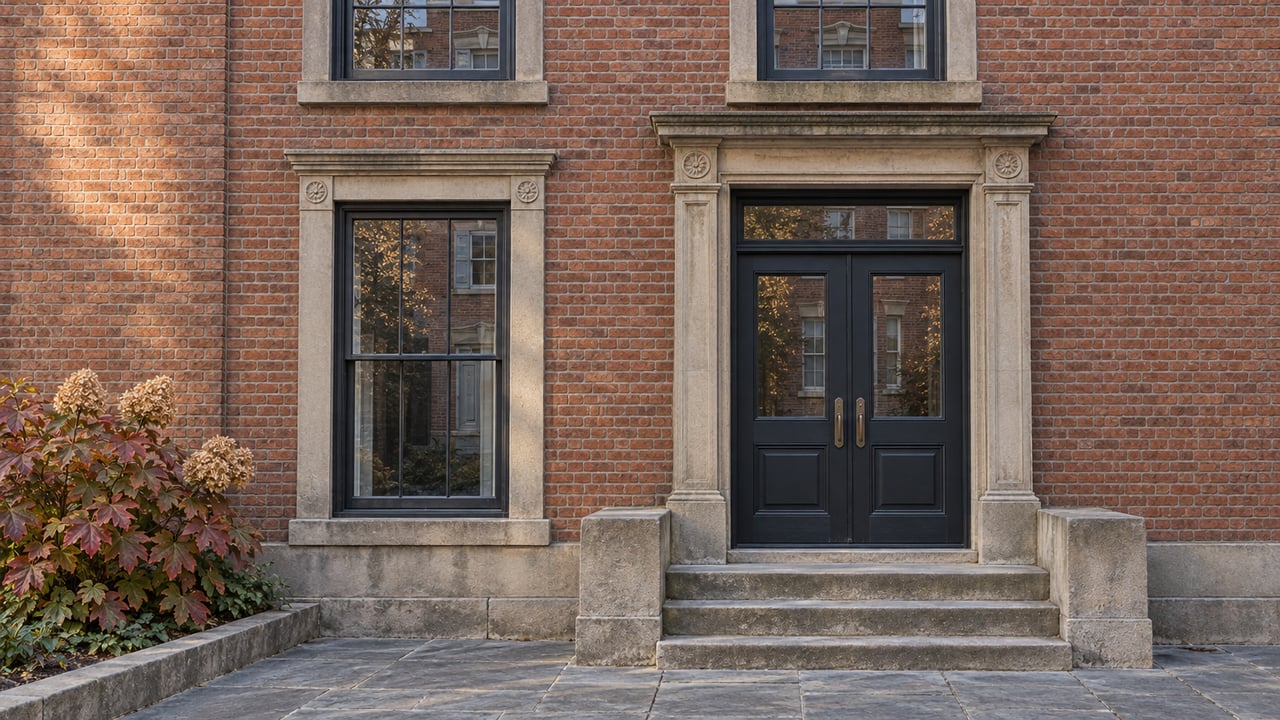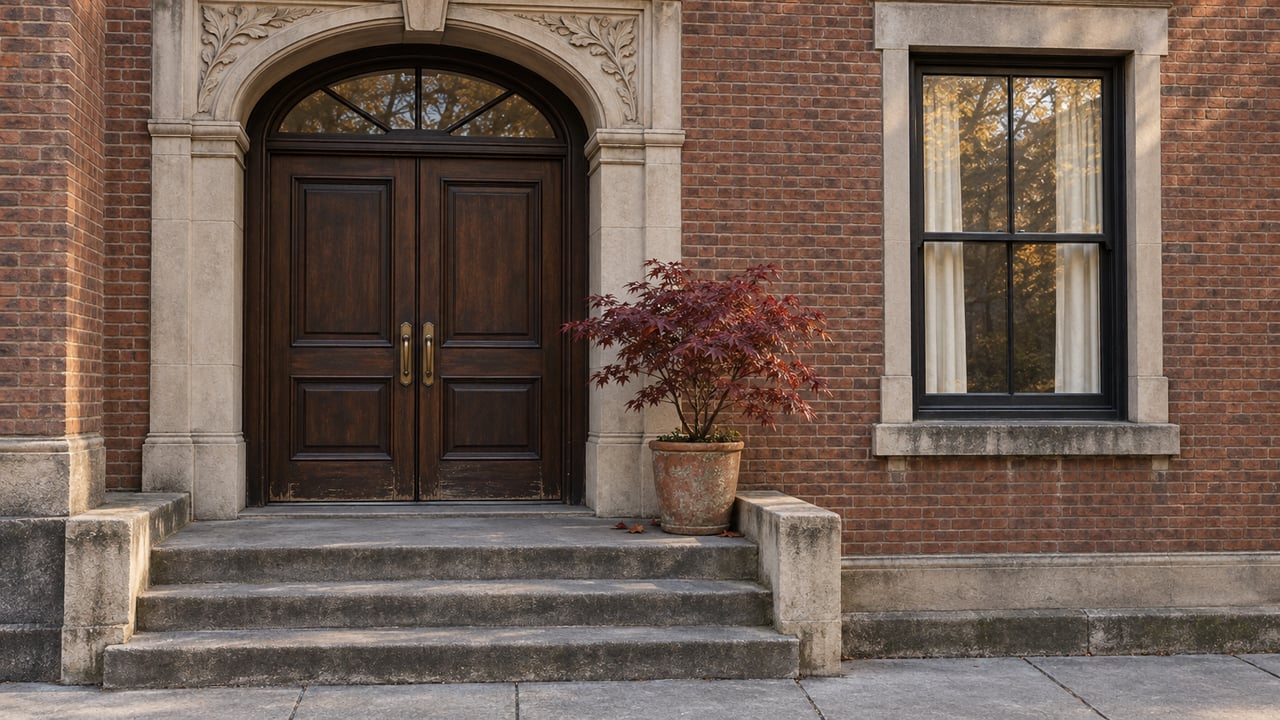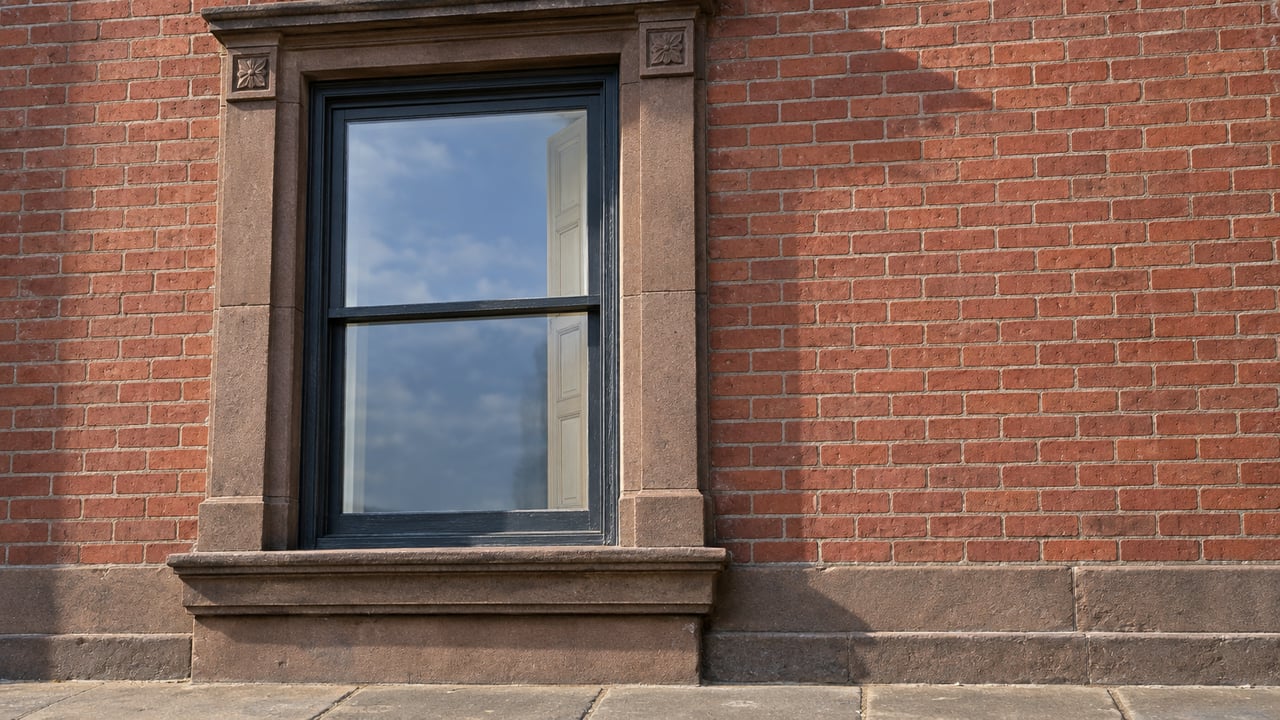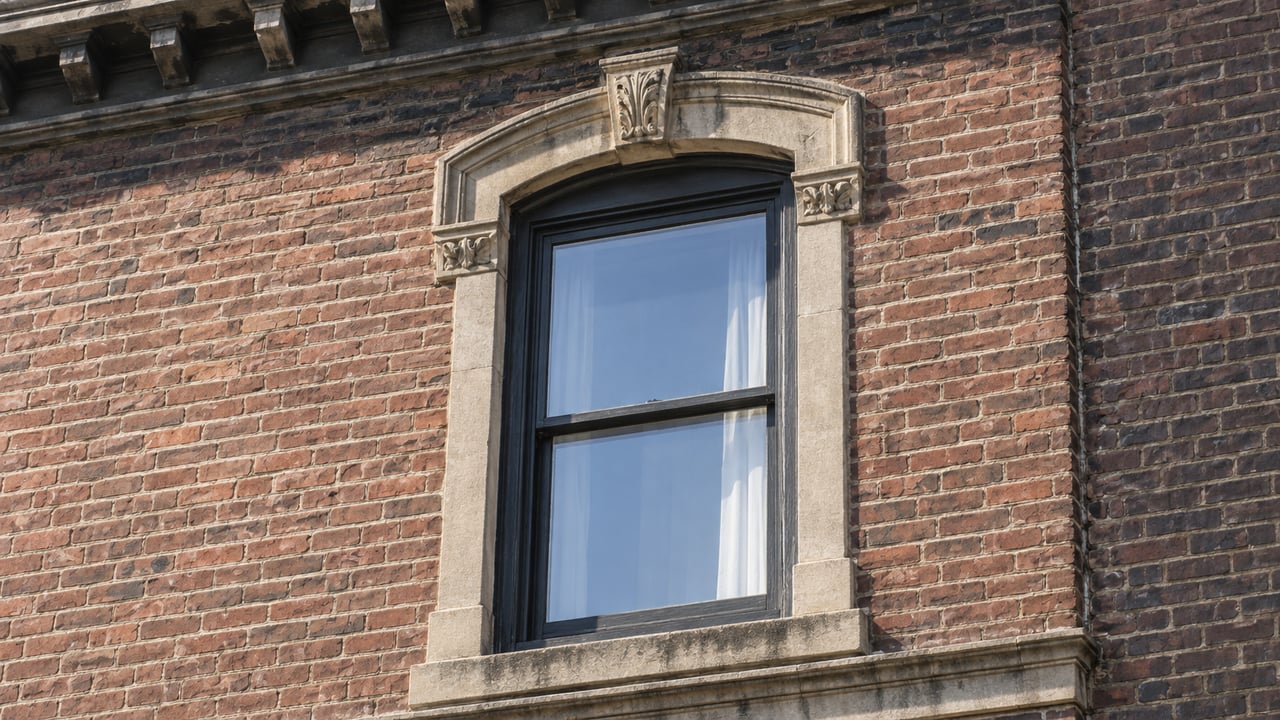
On March 10, 2026, the Landmarks Preservation Commission held a hearing on a proposal that most buyers shopping Harlem townhouses would assume couldn't exist: a brand new house, built from scratch, on a vacant lot at 163 West 122nd Street, inside the Mount Morris Park Historic District Extension. The Landmarks Preservation Commission's March 10 actions list the application as approved with modifications.
If you've been told that landmark status means a neighborhood is frozen, this is worth sitting with. A historic district in Harlem just approved new construction on empty land, in the same review process that governs whether you can swap out your own windows, as the Landmarks Preservation Commission explains.
That contradiction is the whole story for anyone pricing a townhouse purchase or a renovation budget in Harlem right now. The Commission isn't a museum guard standing between you and a shovel. It's an editor. It has opinions about materials, proportion, and street wall. It does not have a blanket objection to building.
What the Commission Actually Controls
The Mount Morris Park Historic District runs roughly from West 119th to West 124th Streets between Lenox Avenue and Mount Morris Park West, thirteen blocks of largely intact late nineteenth century rowhouses and churches anchored by Marcus Garvey Park. The Landmarks Preservation Commission's own 1971 designation report described it as an area that had kept its architectural character "remarkably well." That language explains what the district was built to preserve: the read of the street from the sidewalk.
It does not explain what happens inside your walls, which is a common point of confusion. Interior renovation in a landmarked building generally does not require Commission review at all. Some renovation work requires Commission review. A new building on a long-vacant lot still has to speak the district's architectural language on its face, but the fact that new construction can happen at all means the Commission is managing compatibility, not prohibiting activity.
That distinction matters financially. If you're buying a landmarked shell with the intent to gut it, the review process matters to your renovation timeline. A well-prepared ALT-2 filing typically clears DOB review in four to eight weeks. Landmarks review can add anywhere from a few weeks to a full Certificate of Appropriateness hearing cycle of three to six months.
The Numbers Behind the Assumption
The price data across Harlem's sub-markets tells a version of the same story, and it's easy to misread if you only look at the median.
In Central Harlem, the median sale price over the three months ending March 2026 was $950,000, up 9.8 percent year over year, but the number that actually moves is price per square foot: $951, up 14.2 percent over the same period. Homes are also sitting longer, an average of 162 days on market compared to 97 days the year before, on fewer transactions (39 sales in March 2026 versus 53 a year earlier).
West Harlem shows the sharper version of the pattern. The median sale price over the three months ending March 2026 was $800,000, down 11.4 percent year over year, while price per square foot climbed to roughly $1,500, up 85.5 percent. Homes moved faster too, 71 days on market against 97 the year before.
East Harlem's price per square foot reached $1,090 as of December 2025, up 35 percent year over year, even as the median sale price for that month, $600,000, was down 6.6 percent.
Read those three sub-markets side by side and the pattern is consistent even though the median price moves in different directions in each one. Per-square-foot figures are up in all three, though the East Harlem reading covers a different window (December 2025) than the other two. Median price is noisy because it depends heavily on which specific homes happen to close in a given window, a full gut-renovated townhouse one month, a smaller co-op conversion the next. Price per square foot softens that effect without removing it, since property type and condition still vary from sale to sale. It suggests the housing stock itself, including landmarked rowhouses limited in supply, is holding its value, but three neighborhood snapshots are a signal to test against block-level comps, not a verdict. Harlem is not a market where prices are simply rising or falling. The medians and the per-square-foot figures describe different parts of the picture, and the comps on the specific block are what settle it.
Where the Money Actually Goes
The freedom the Commission leaves you inside your own walls is exactly where your renovation budget will go, and 2026 cost benchmarks make the stakes concrete. A full gut renovation of a Harlem-style brownstone, replacing systems, reconfiguring layout, bringing the building to current code, runs roughly $450 to $750 per square foot for a three or four story home, landing many projects in the $650,000 to $1.4 million range before finishes get luxurious. Push into landmark-grade restoration, custom millwork, period-accurate facade work, materials that satisfy the Commission's standard for historically appropriate replacement, and the benchmark climbs to $850 to $1,000 per square foot, with full restorations inside historic districts reaching $1,000 to $1,200 or more.
The premium isn't abstract. Facade restoration using real brownstone or brownstone-tinted stucco can run tens of thousands of dollars more than a basic masonry patch, according to figures compiled across recent NYC brownstone renovation guides from licensed architecture firms working these blocks. None of that touches your kitchen, your bathrooms, your floor plan. The premium is concentrated entirely on the face of the building
The Long Arc, In Two Sales
Two Harlem sales, separated by years, show what this scarcity is actually worth and where it stops being worth anything.
Not long after a $5.1 million townhouse closing set the neighborhood's record in February 2018, two adjacent townhouses at 32 and 33 Mount Morris Park West hit the market together asking a combined $27 million, more than five times that record. Appraiser Jonathan Miller called the ask "unheard of" in comments to the Wall Street Journal. The homes had real history behind the number: built in 1888 as part of a four-house Renaissance Revival compound for John Dwight, the founder of the company that created Arm & Hammer baking soda, with one house originally built for Dwight's daughter Clara and her husband, Civil War commander General Alexander Phoenix Ketchum. The renovated half of the pair had been bought by interior designer Brad Linard in 2005 for $1.55 million and carried through a $2.5 million gut renovation. None of that history moved a buyer to write one check for both houses. Within about a year, the listing split. The renovated 7,000 square foot house asked $7.95 million on its own. The one still needing restoration asked $3.95 million. Combined, that's roughly $11.9 million, less than half the original ask, and it's the price the actual comps supported.
Compare that to 265 West 139th Street on Strivers' Row, the McKim Mead & White-designed townhouse where Bob Dylan lived from 1986 to 2000. He sold it for $560,000. It resurfaced in 2017 asking $3.7 million, was later reduced to a $3 million ask, and eventually sold for $2.8 million after nearly a year on the market. That's still roughly five times what Dylan received for it, compounding over time in a district where the housing stock cannot expand.
Put the two sales together and you get the actual mechanism worth understanding before you write an offer. Landmark scarcity compounds real value over a long horizon, the kind of appreciation the Dylan house shows. It does not protect a price that ignores the comps in the short term, which is what corrected the Mount Morris Park combined listing back down to earth. The Commission fixes the supply. It does not fix what a buyer will pay for a story.
A Few Questions Worth Asking Before You Make an Offer
Does the Landmarks Preservation Commission review interior renovations? Generally, no. Review depends on the work being proposed.
Can you actually build new construction inside a Harlem historic district? Yes. The March 2026 approval for the vacant lot at 163 West 122nd Street shows the Commission will approve genuinely new buildings, provided the design fits the district's established massing and material language. Landmark status governs compatibility, not whether building happens at all.
Why did the $27 million Mount Morris Park listing split into two smaller ones? The combined ask priced in a story, the Dwight family history and the mansion assembly potential, at nearly double the price per square foot the surrounding market supported. Once the listing sat without a buyer for the full package, it was repriced separately at figures much closer to what recent comps in the district actually justified.
Buying or selling a landmarked townhouse in Harlem means pricing two different things at once: a facade and an interior renovation. Getting that split right, and knowing what the comps in your specific block actually support before you set an ask or make an offer, is where the real work of a transaction happens. If you're weighing a Harlem townhouse purchase, sale, or renovation and want a second set of eyes on what the comps actually say, Phyllis M Mehalakes would be glad to talk it through. Let's Connect.
This article is general information, not legal, tax or financial advice. Consult a qualified professional about your situation.